
On the 11th November 2019 a section of the Scheduled curtain wall at Lewes Castle suffered a catastrophic collapse, resulting in extensive property damage and the loss of a significant section of the surviving defences of an early and important castle.
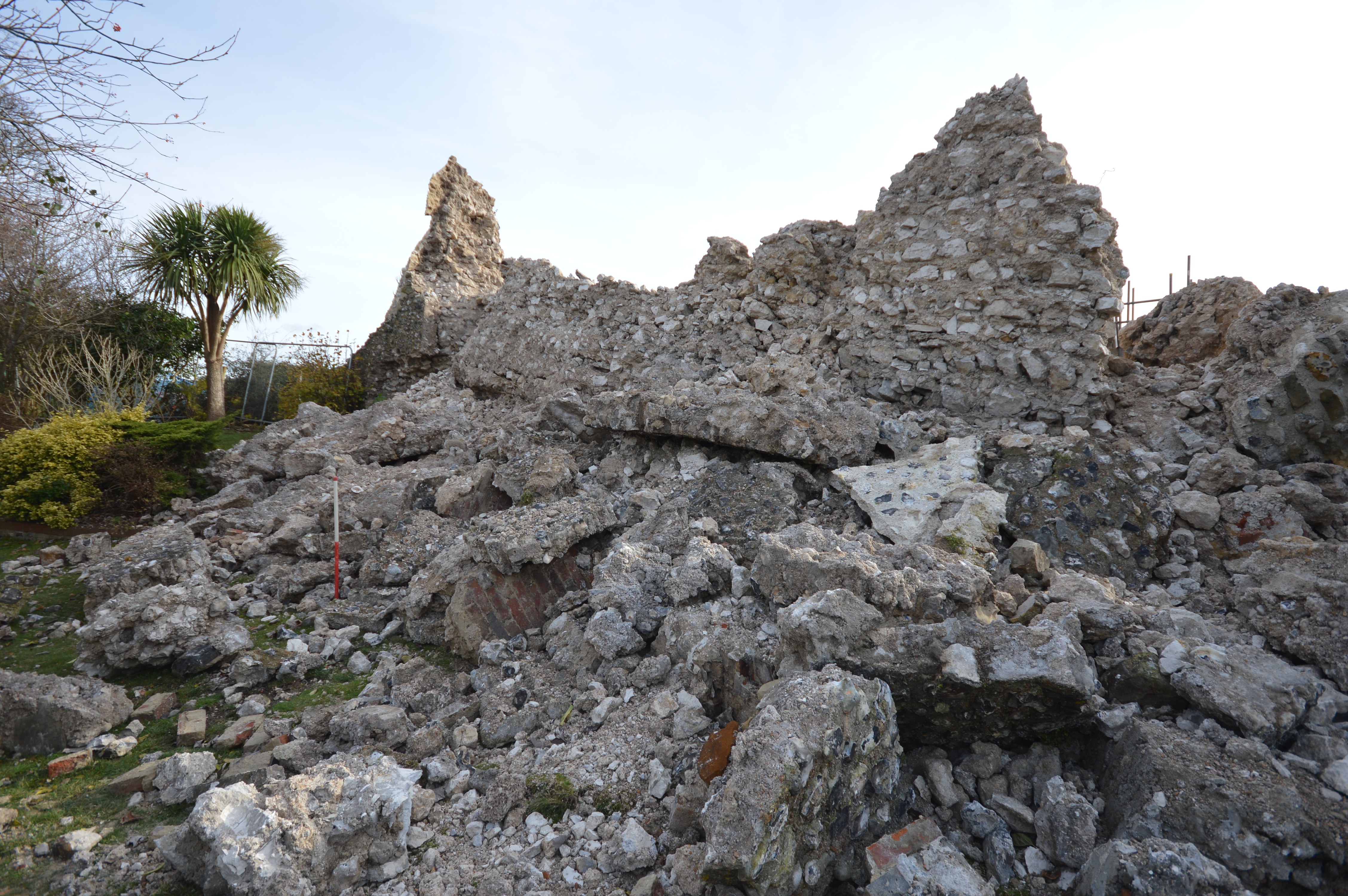
View of the wall after the collapse
The sheer scale of the collapse and the damage it caused has required, from the outset, a truly collaborative and multidisciplinary approach between various organisations and stakeholders, including archaeologists, construction contractors, structural engineers, statutory bodies, and of course the owners of the land affected.
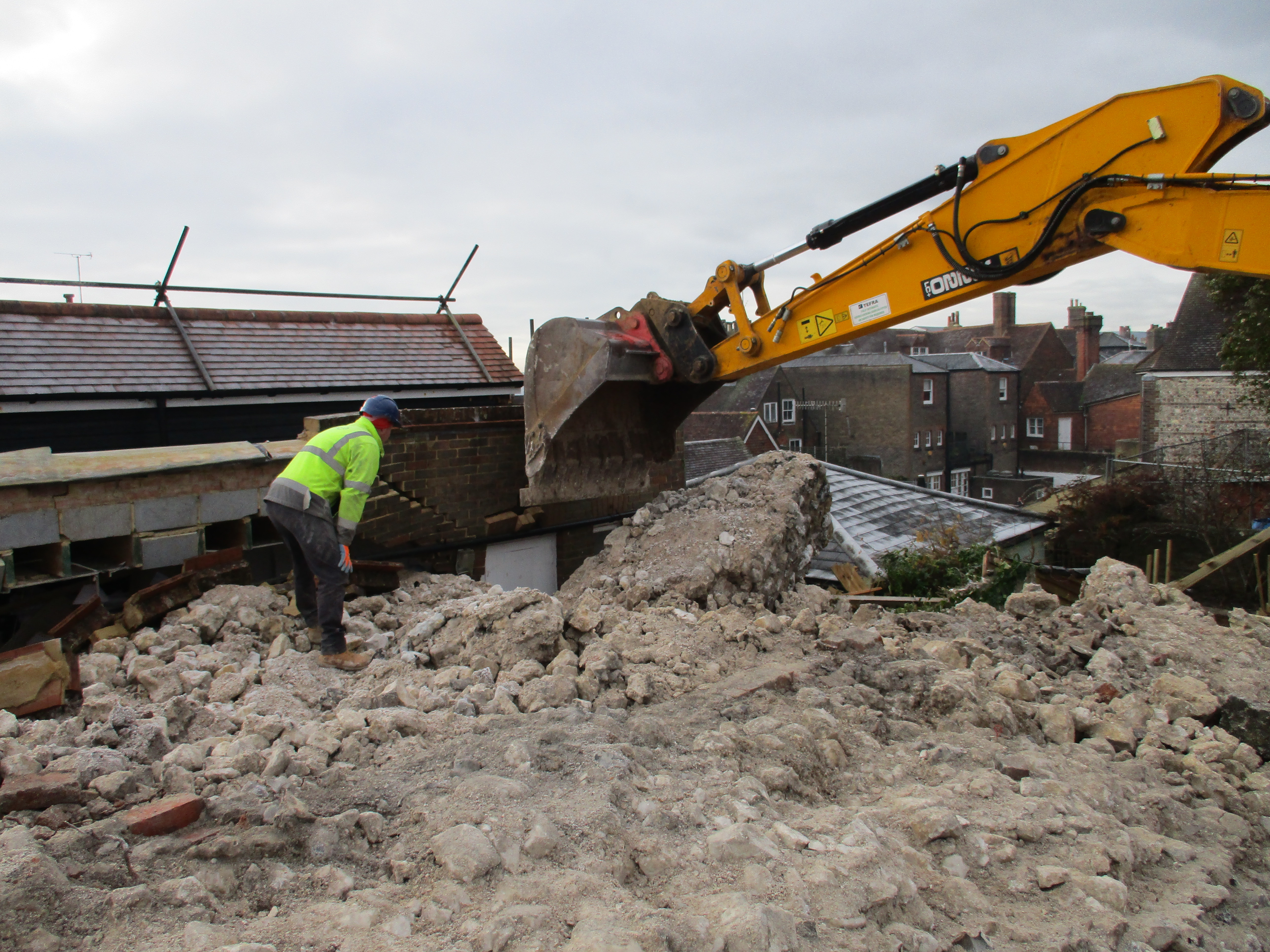
Clearing the debris
Together, over the course of two and a half years, our work has progressed from initial stabilisation and clearance of the site to the subsequent assessment of the surviving remains, in terms of their archaeological significance, their capacity for reconstruction and the causes of the collapse. Subsequently, we have used the results of this work to formulate and deliver a scheme for reinstatement that meets the needs of the many parties involved.
In archaeological terms, our work has shown that the curtain wall formed just one component of the southern defences of the castle, along with a massive defensive bank and ditch that was created in the immediate post-conquest period. The wall itself was of mass construction built atop the pre-existing defensive bank. As first built, it consisted of a core of mortared chalk rubble, supported on a shallow raft or layer of chalk and clay, and encased in a facing that has long-since been replaced through centuries of maintenance and repair.
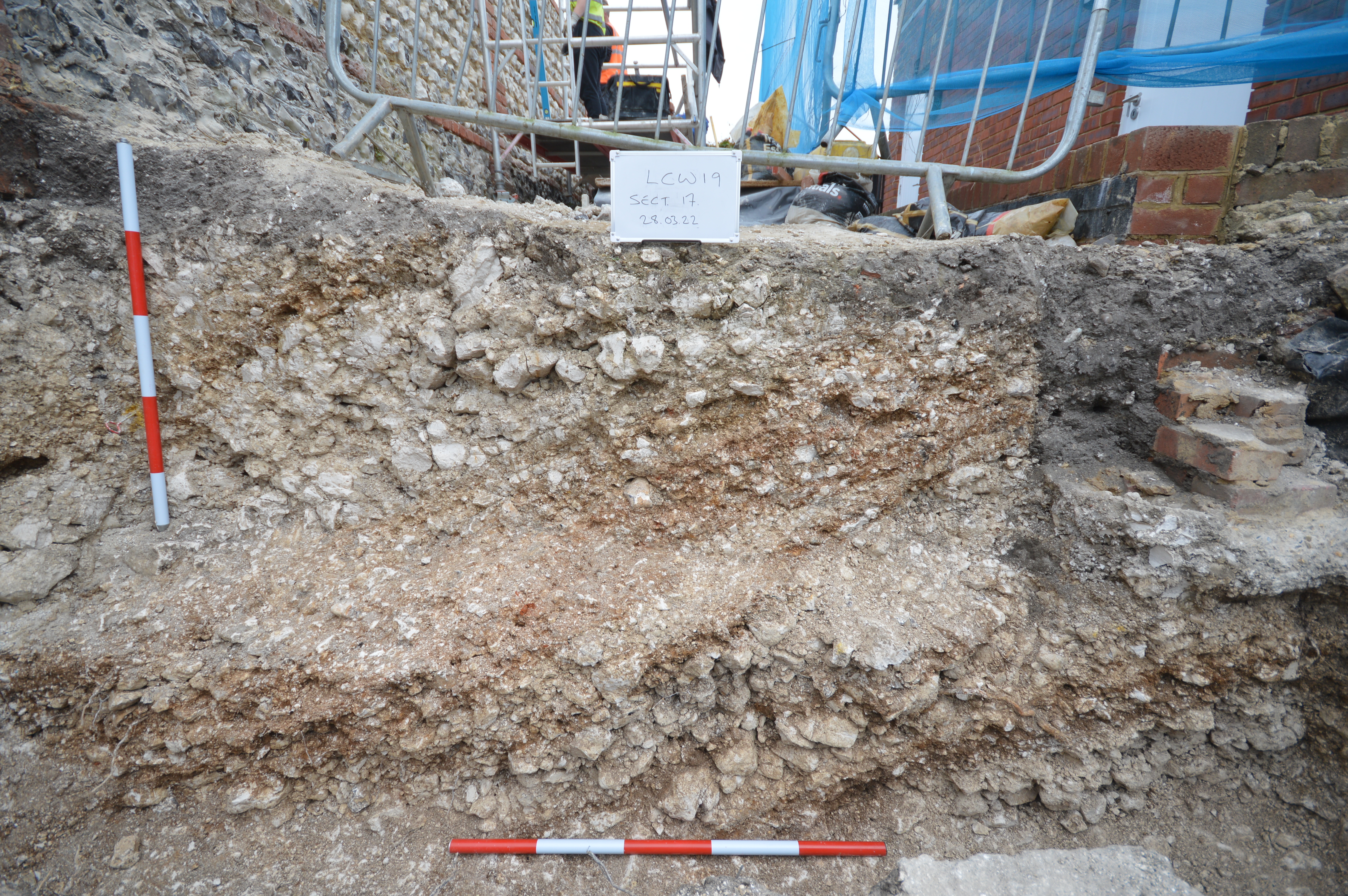
Section through the defensive bank beneath the wall
The primary factor leading to the collapse of the wall is considered to be saturation of the chalk rubble core through water ingress. However, our work has also shown that this itself probably resulted from a complex interplay of secondary factors. These include the undermining of the foundations of the wall through later changes in ground level, the extensive use of impermeable cementitious mortar during repairs carried out in the mid-20th century by the Ministry of Works, and subsequent episodes of relative neglect that has allowed fissures and vegetation – and water – to penetrate deep into the core of the wall. Ultimately, however, it is our changing climate that provided the eventual catalyst for structural failure, with ever more frequent periods of exceptionally heavy rainfall leading to saturation of the chalk rubble core as water ingress progressively outstripped the core’s drainage capacity.
In light of these findings, full reconstruction of the wall to its former height was not considered viable. Instead, reinstatement has focussed on establishing a balance between stabilising and protecting what remains of the wall and its associated archaeological evidence whilst meeting the needs of the landowners whose lives and property have been so profoundly affected by the collapse. At the same time, we hope to use the results of our work to inform on the future management of similar monuments elsewhere, so we can better adapt and protect our unique heritage to our ever changing climate.
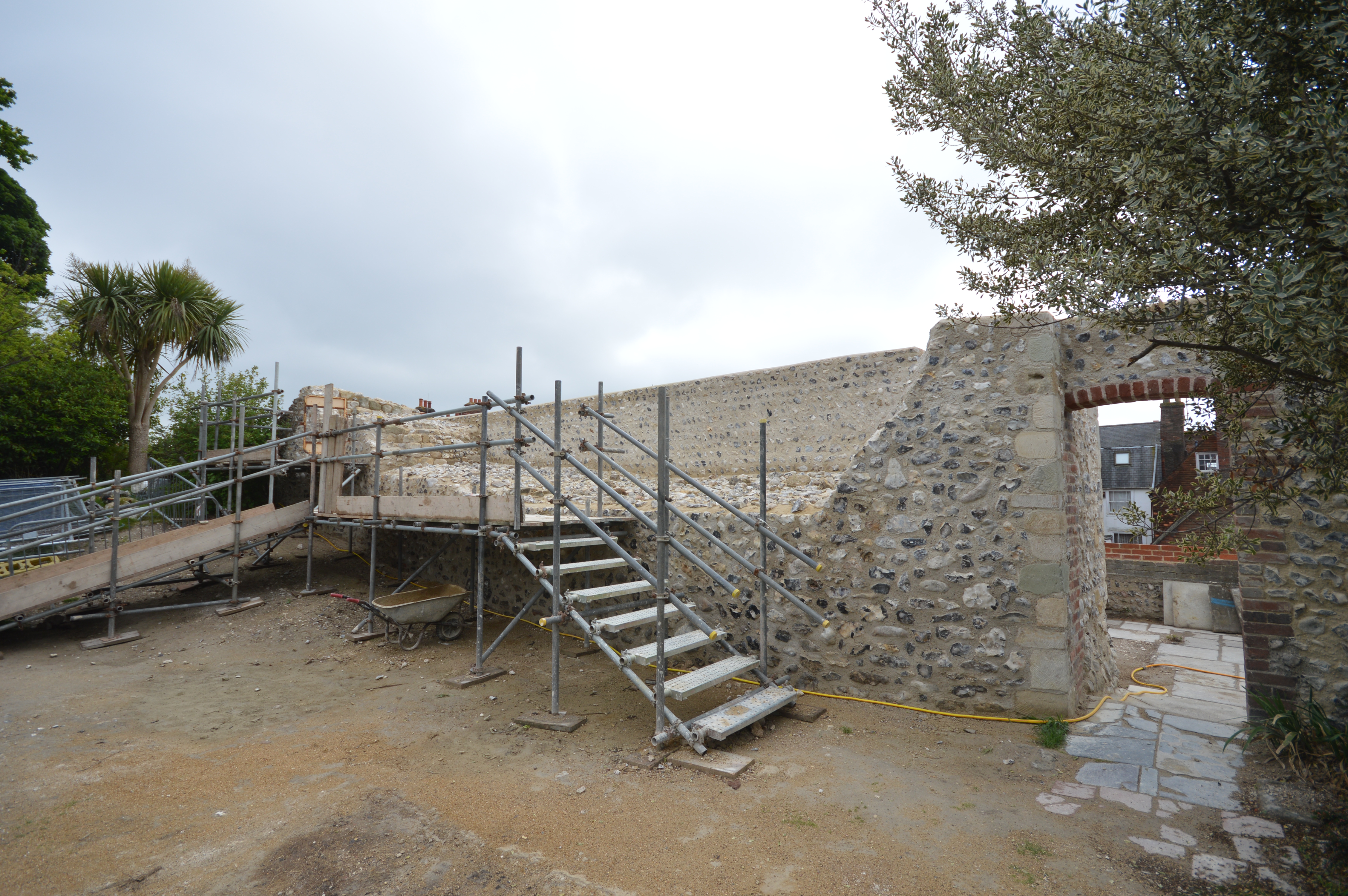
Reconstruction work nearing completion
Diccon Hart will be presenting a talk on the work at Lewes Castle in the forthcoming CBA South East Conference on the 18th of November 2023: more details to follow.

 hbarchaeology.com